There’s no dissent that archery is a fun sport, even though it brings along its complications and hazards.
You must be extremely cautious if you’re an amateur, and we strongly recommend having prior knowledge before you start this sport. Review our complete guide to archery safety before setting up any range at home.
Even if you’re a professional and want to bring home your favorite sport, you need to be wary because archery is no joke, and a single mistake can have grave consequences.
You also have to be tremendously careful if you’re trying to teach your kid because they can be very unpredictable, and a lethal weapon and unpredictability don’t go on well.
You’ve to comply with numerous restrictions, along with numerous safety guidelines that you must follow to make sure you’ll not harm yourself or others in the process.
How To Make Your Own Home Archery Range Done Right
Come along and, we’ll help you make sense of what it takes to bring archery home and, we’ll guide you through all the complications you might face while doing so.
For those who are new to this game, we’ve also included some external links to help you guide and learn about this game.
Let’s now get started on how to make your home archery range right.
Safety is Paramount
The safety of everyone must be at the top of your priorities.
If you’ve kids or pets, don’t let them even enter the archery range while you’re using it.
They’re very unpredictable, and a single mistake can prove lethal.
While you don’t require your neighbors’ consent, it’s preferred, especially if you live nearby, so that they can also warn their children about when not to wander off.
Fencing your backyard with at least a six-foot-tall wall is an excellent idea as it shields your arrows and protects the outer areas.
You could also opt for an underground range or play in your basement if you’ve the resources.
Archery is no joke, so you’ve to be extremely cautious while you’re playing it.
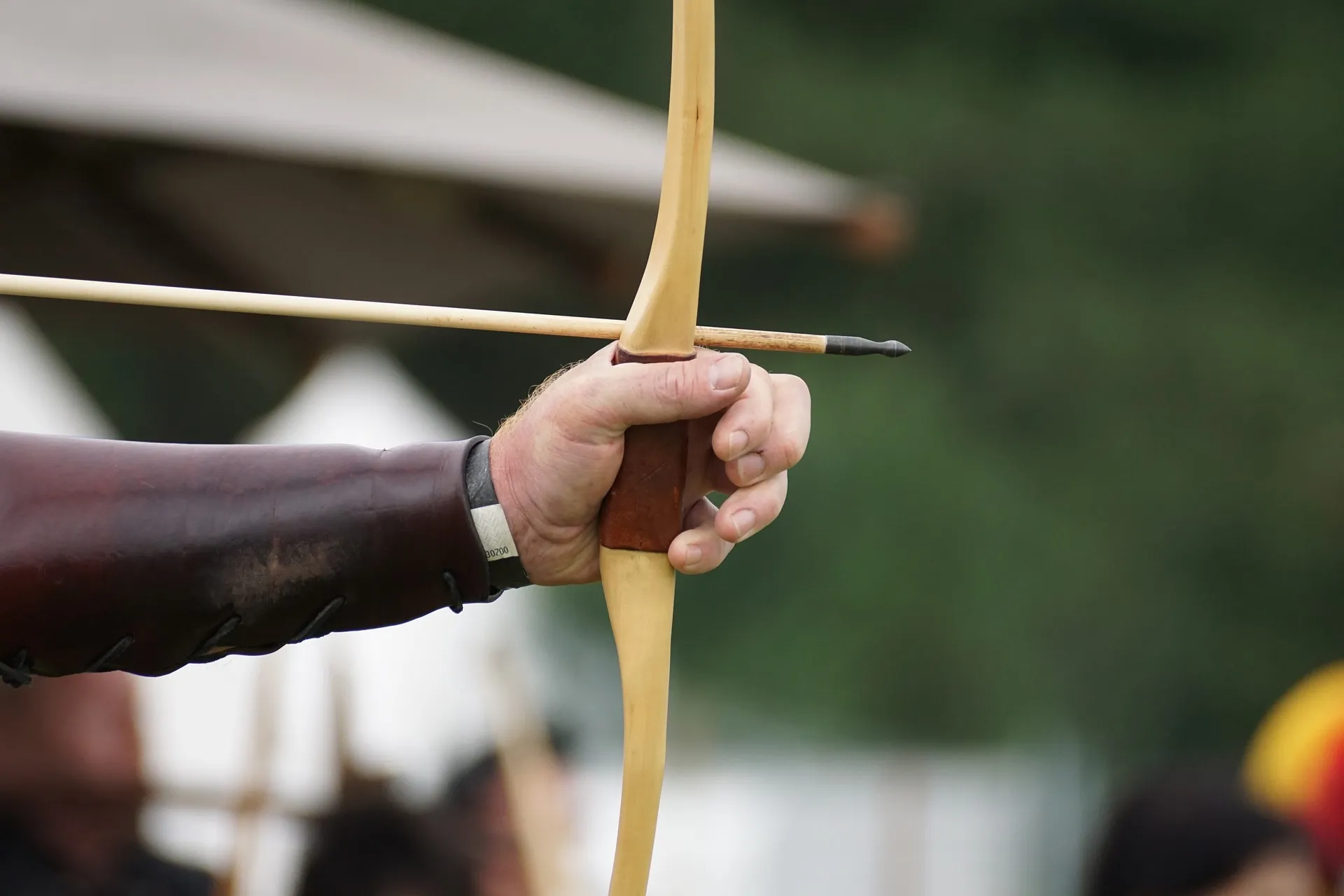
We strongly recommend using an arm guard while playing archery because the hard materials underneath will protect your skin or arm against arrow related injuries.
For a novice who has shot less than two hundred fifty times, we suggest using a release aid, which is a device that can shoot arrows more precisely than with your fingers.
Never aim the arrow towards the sky — always make sure your kid aims at the target or the ground.
If you’re teaching your kids archery, check the equipment before use and throw away any faulty equipment.
Check for Restrictions
Although soccer and volleyball can be three times more dangerous than archery, many local governments in the US restrict playing archery near or in a residential area.
Look into the state, county, and city government websites or call them to make sure that there are no restrictions placed that can prohibit you.
For instance, Montana has placed quite a few regulations concerning archery under its jurisdiction.
The state of Montana prohibits bows that are shorter than 28 inches and arrows that weigh less than 300 grams, and those bows and arrows are illegal.
To answer whether you can or can’t play archery in your backyard, you must consider researching your county laws.
Section 9.36.060 of the Sacramento county code prohibits anyone other than peace officers to even possess any weapon, including bows and arrows, that may be lethal to human beings or the wildlife.
Chapter 9.41 “Bows and Arrows” further clarifies that though it’s legal for a property owner or anyone with the consent of the property owner to shoot arrows in their backyard as long as the arrow doesn’t intrude onto a nearby property where people live.
To clarify further, you can shoot an arrow if your property includes land over one hundred fifty yards, and even if it doesn’t, you’ve to make sure that the arrows don’t land on an adjacent residential building.
If your county doesn’t allow a home archery range, you can always find a suitable archery range nearby.
Range Layout
After you make sure that archery is excellent in your vicinity, the next sensible thing to do would be to create a proper range layout that ensures minimum complications and maximum satisfaction.
There are a few things that you need to consider while designing a quintessential archery range, such as-
You’ve to carefully consider this so that the sun doesn’t fall on your eyes while shooting the arrows.
From where you shoot, the shooting line must be on the north side of the range, while the targets should be on the south side within +/- twenty degrees.
The explanation for this is that the sun usually falls on the archer’s backside, creating a near-perfect range for precise shooting.
Unfortunately, if there’s nothing you can do to prevent shooting without getting sun in your eyes, you must align a barrier in such a way that stops sunlight from harming your vision.
If your range faces the woods, you must place your target towards the woods so you don’t endanger anyone when you shoot.
If the land is a bit more elevated, try to flatten it as much as possible, either by digging the excess earth or adding soil where needed.
The most appropriate option is to use a flexible measuring tape with the help of another person.
You need to grasp one of these and, with the help of another friend, measure and mark off every 10-yard increment.
If your budget approves, you can also buy a measuring wheel that helps you to measure the range while you stroll through your range.
A measuring wheel is especially beneficial for the old or those who have back pain.
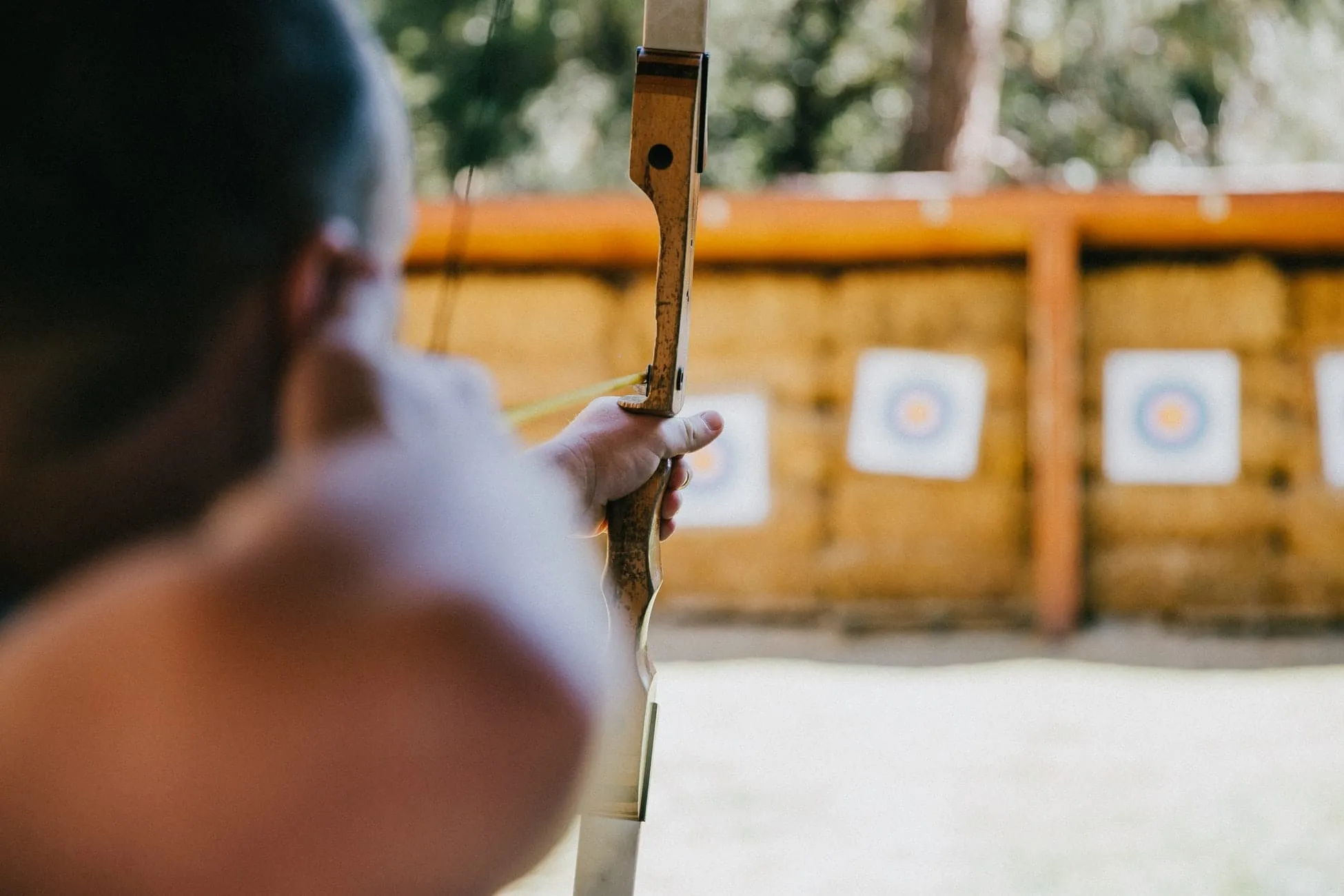
You must divide the whole archery range into parallel shooting lanes with a distance of about five meters and containing one target each.
This five meters’ distance will ensure that the archers each get a personal space of about a meter for precise shooting.
You must clearly mark a line about fifty yards from the target, called the shooting line, and the archers should only shoot astride this line.
If you’re concerned about where to place your target, then it single-handedly depends on the size of your yard. If you’ve a large area, fifty yards is the go-to number, while we prefer twenty or even thirty if there’s a shortage of land.
Again, if you can afford and sustain a wide archery range, then we recommend adding a waiting line (where forthcoming archers) wait four meters away from the shooting line.
Indoor or Basement Archery Range
If you lack additional ground outside but have floor space inside your home, you can opt for an indoor or a basement archery range.
Of course, they wouldn’t be as grand as an outdoor archery range, but they can be a pretty decent substitute for archery practice and considerably safer than an outdoor archery range.
To set up this range, you need nothing fancy but a pair of bows and arrows, a couple of styrofoam targets, and some kind of backstop, though you’ve to make sure that the room you use is properly lit and well-ventilated.
Ensuring proper lighting ensures precise shooting, focused concentration, and reduced strain on the eyes.
Again, no one should be allowed to move through the shooting lanes while an archer aims his arrow, and the archer must also be careful while aiming his arrow because, in a narrow shape like a basement, archery can prove lethal.
Suppose you’re particularly obsessed with the hunger games or any other franchise.
In that case, you can set up a hunger game-themed range that will significantly increase your motivation and drive to excel.
Another advantage of a basement archery range is that you can secretly practice archery before going into the actual world and all this without endangering your neighbor’s kid or a pet.
This also means that you don’t need your neighbor’s consent or worry about violating local laws because you can do whatever you please inside the premises of your private property.
Targets
The target is where you aim and fire your arrows at.
It’s the foremost well-known form of archery, in which individuals shoot at stationary circular targets at shifting separations.
It takes place both outside and inside, over separations of up to 90 meters and using the conventional five-color, 10-ring target.
They practice target archery in clubs in over 150 nations worldwide and it’s a quick developing sport.
This can be the foremost important arrow based weaponry target sort that each toxophilite or bowhunter has practiced with or purchased for themselves.
For apprentices in key practice sessions, this bow and arrow target works well for repeat use as it holds together so well and incorporates an enormous surface to account for missed shots.
We know that a foam layer block target is lightweight and moveable and permits the simple evacuation of arrows for light bows. If you’re handy, you can even build your own DIY foam archery targets to save money.
For the most part, you’ve to pinch the bolt between foam layers to create this arrow based weaponry target type work, using contact rather than drive to halt its force.
One restriction with this target is that it can be really troublesome to remove arrows.
It’s additionally proposed to use this target for outdoor practice sessions where you’ll set it up rapidly and begin shooting at ground level or from a tree stand.
Watch out when using overwhelming bows, as this may make it harder to evacuate bolts.
Maybe this is the finest bows and arrows target sort because it plans you for real-life chasing scenarios and is replicas of creatures, whether lively or ended, giving a really fun arrow based weaponry encounter.
Numerous of these targets contain distinctive overlay alternatives, such as uncovering the vitals on the exterior so you’ve got a thought of precisely where your bolt would hit, and others have point values aiming for competitive shooting.
One restriction, though, is the inclination of the foam center to wear out due to weather.
This target sort is great for similar chasing recreations, and it will help you shoot at the shadow of your genuine target game animal, and this target sort is light to carry and set up for many shots down the extent or within the woods.
Backstops
In the archery universe, one can spend more time finding stray arrows rather than shooting them.
So one day, the archery gods had enough and created something called a backstop.
Today it has become a must-have part of the total backyard archery experience.
A godsend for beginners, a backstop stops your arrow before they stray far off than the actual target and saves not only time but lives as it doesn’t let arrows stray off and hit someone.
If you decide to make a wall your backstop, that would be a blunder as the arrows would break upon impact.
You would need something thick yet soft so that the arrow can sink in nicely yet not break upon impact.
The most basic and cheap kind of backstop could be a haystack.
Though it will serve your cause, using a haystack is more bothersome than useful.
You might have to re-stack time and again to fill the gaps.
We recommend something more permanent, like foam mats, as they’re highly resilient and also cheap.
While making your backstop, you must make sure that your backstop is higher and wider than your target so that your arrows don’t stray off somewhere.
Or you might try this backstop from net world sports, which comes in various sizes.
That comes at a whopping price of $115, but if you think you’ve enough area for backyard archery, money shouldn’t be a problem.
Bow Stands
If most archery beginner kits don’t include it, then why should you bother?
But if you want to take an active interest in caring for the bow, then a bow stand would be perfect.
A bow stand holds your bow so that it’s away from all the dirt and dust on the ground.
It’s like buying a case for your iPhone. It seems ridiculous, but you know you need it.
Bow stands can phenomenally increase the bow’s lifespan and protect its bow’s string from getting mishandled.
Frequently Asked Questions
It varies by location. Some states and counties allow backyard archery as long as arrows don't leave your property, while others ban it entirely in residential areas. Check your local county and city codes before setting up a range to avoid fines or legal trouble.
For beginners, a 20 to 30 yard range works well and fits in most backyards. Competitive archers may want 50 yards or more. You'll also need buffer space behind and around your target for safety, plus a backstop that's wider and taller than the target itself.
Yes, an indoor range is a great option if you lack outdoor space or want to practice year-round. You'll need at least 10 to 15 yards of clear length, good lighting, proper ventilation, and a reliable backstop. A basement range is also more private and avoids issues with local outdoor restrictions.
Final Thoughts
A home archery range gives you the freedom to practice on your own schedule without driving to a club or paying range fees. The key is doing your homework on local laws, investing in a proper backstop, and designing a layout that keeps everyone safe.
Backyard or basement, a well-planned range will pay for itself in improved skills and convenience.